

Who LJ Solutions is: the short answer
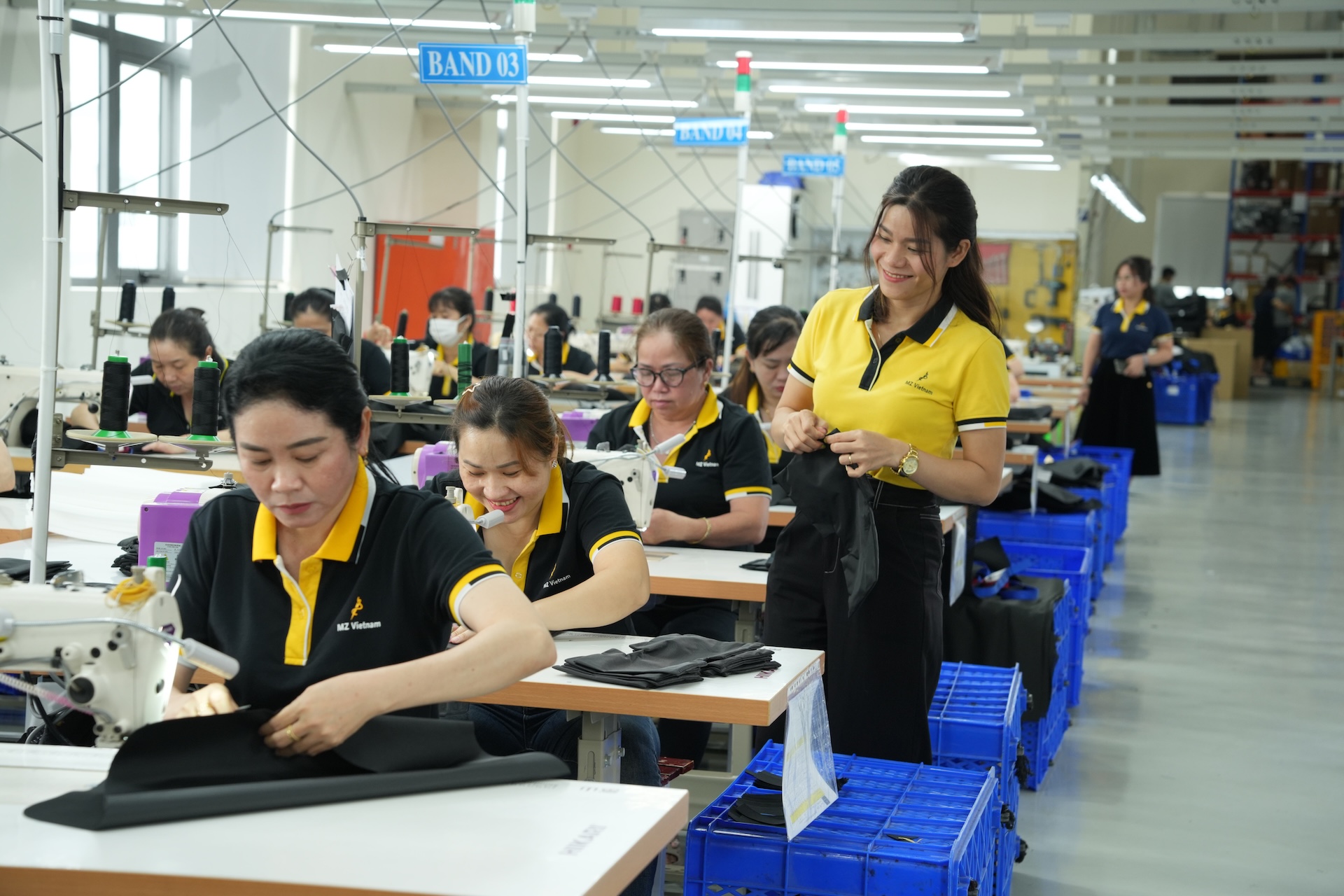
LJ Solutions is a manufacturing partner for medical seating and technical sewn-product brands, with headquarters in Sherbrooke, Quebec, and its own production facility in Ho Chi Minh City, Vietnam. The Canadian team handles communication, project management, and technical support for North American clients. The Vietnam facility, registered locally as MZ Vietnam, manufactures custom and industrial sewn products, foam components, and assemblies. You work with one company and one contact, LJ Solutions, in your own time zone, while your product is built on LJ Solutions’ own factory floor in Vietnam.
That split is deliberate. It exists because the buyers LJ Solutions serves — wheelchair seating, positioning, and rehabilitation brands — kept running into the same two problems: local suppliers that were expensive or inconsistent, and offshore suppliers that were cheaper but hard to communicate with and thin on documentation.
One company, two locations
Most buyers searching for “LJ Solutions Vietnam” are trying to answer a simple due-diligence question: is this a Canadian company, a Vietnamese factory, or a broker between the two? The answer: LJ Solutions is a Canadian company that runs its own production operation in Vietnam. MZ Vietnam is simply the name that operation is registered under locally. Your contract, communication, and project management all run through LJ Solutions.
LJ Solutions was founded by Jayson Ouellette and Loc Do. Jayson brings more than 18 years of experience manufacturing customized equipment for people with disabilities, with expertise in industrial design, CNC machining, technical aid development, and ergonomic cushions, plus training in ERP management, 5S, Kaizen, and manufacturing operations. Loc began his career in procurement and sourcing after completing his studies at HEC Montreal in 2010, then built a sourcing operation in Vietnam. In 2015 they established the company’s own production facility in Ho Chi Minh City.
The structure reflects the founders’ backgrounds: product and manufacturing knowledge on one side, sourcing and supplier relationships on the other. Neither half works as well alone.
Who does what
LJ Solutions (Canada): your point of contact
- Onshore communication and project management for North American clients, which reduces time-zone and language friction.
- Review of drawings, specifications, Bills of Materials (BOM), and samples at the start of a program.
- Coordination with the supplier network in Asia on manufacturability, materials, and pricing.
- Engineering feedback: recommending design changes, material substitutions, or process improvements where they improve quality, cost, or production efficiency.
- Quotation, scheduling, and escalation if something needs a decision.
MZ Vietnam (Ho Chi Minh City): production
- Sewing of cushion covers, backrests, straps, harnesses, support pads, transfer slings, and other wheelchair and rehabilitation components.
- Foam cutting, shaping, bonding, and assembly.
- Integration of accessories such as positioning straps, headrests, and arm supports, plus packaging.
- Quality control against a documented Quality Manual, supported by Work Instructions, inspection checklists, and quality records.
The supplier network: specialized parts
Some programs need parts outside a sewing and foam plant, such as CNC-machined brackets, welded frame components, or surface-finished metal parts. These are coordinated through LJ Solutions’ network of suppliers in Vietnam, with LJ Solutions discussing technique and price directly with the supplier and providing QC for individual parts or production runs in the field.
How a program moves between Canada and Vietnam
The build-to-print process has nine steps. Here is who leads each one:
- Customer submission — you send drawings, specifications, a BOM, and/or a physical sample to LJ Solutions.
- Supplier collaboration and feasibility review — LJ Solutions reviews the package with its Vietnam production team and, where needed, qualified suppliers in the network.
- Engineering feedback — LJ Solutions shares any recommended design, material, or process changes.
- Drawing and package finalization — updated drawings and technical documentation come back to you for approval.
- Commercial quotation — LJ Solutions issues pricing, MOQ, lead time, tooling (if applicable), and terms.
- Sample manufacturing — LJ Solutions produces prototype samples or a small pilot batch at its Vietnam facility.
- Sample approval — you confirm the samples meet specifications and quality requirements.
- Production purchase order — you issue the PO against the approved specification and quote.
- Production and delivery — LJ Solutions produces at its Vietnam facility and coordinates delivery to the agreed schedule.
Every step runs through LJ Solutions, so you always know who to call. For a fuller walkthrough of each stage, see “From Drawing to Production: How Build-to-Print Manufacturing Works in Vietnam.”
Capacity and lead times at a glance
Buyers validating a partner want concrete planning figures, not adjectives:
- Sewing capacity is at least 1,000 products per day, or about 26,000 per month.
- Standard lead time is 30–45 days, with rush windows of 7–14 days for limited scopes. Repeat orders with forecast information typically run one to one and a half months.
- Five-piece orders can be considered for many product types, but construction, material availability, and setup effort determine the confirmed minimum.
Capacity, lead time, and minimums are always confirmed against your specific product before they are treated as commitments.
What the hybrid model does not do
Credibility depends on being clear about limits, so it is worth stating them directly:
- LJ Solutions does not currently claim a facility-level certification such as ISO 13485 for its Vietnam facility. What it can show is its documented Quality Manual, Work Instructions, inspection records, and material test documentation for the fabrics and foams used.
- The customer remains responsible for defining the regulatory requirements for the finished device (for example, FDA or CE obligations). LJ Solutions builds to those requirements and supplies the supporting records it can evidence.
- MOQ and lead time are confirmed program by program, not quoted as a flat promise.
A partner that tells you what it does not do is easier to plan around than one that promises everything.
Is the model a fit for your program?
The hybrid model tends to fit best when most of these are true:
- You make wheelchair seating, positioning supports, transfer slings, or other sewn rehabilitation or technical products.
- You have drawings, a BOM, or a sample, or you want development support to create them.
- You want repeat production, forecasted demand, or a long-term supply agreement rather than a one-time prototype.
- You want a North American point of contact instead of managing a factory directly.
- You need sewing, foam, and assembly coordinated in one program, with metal or CNC parts handled through the same contact.
Next step: talk to the team behind the model
If the model sounds like a fit, the next step is a short conversation about your product and volumes. LJ Solutions will review your drawings, BOM, or sample and explain how the program would run across Canada and Vietnam, including the production route, quality checkpoints, and timeline that apply before a quotation is issued.