

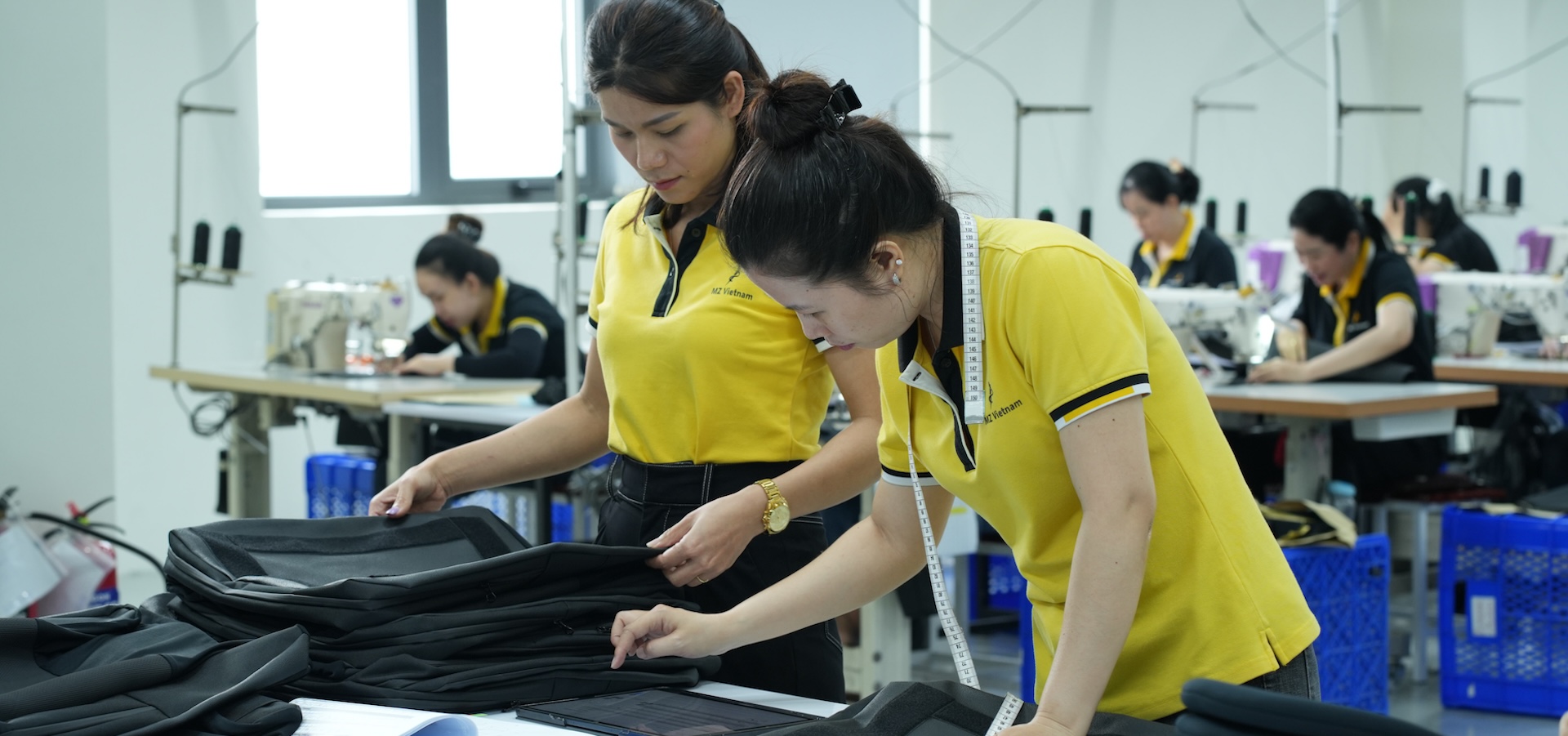
A practical QC plan: the direct answer
A usable contract manufacturing quality control plan for sewn medical components applies four checkpoints consistently: incoming material inspection, in-process inspection, endline inspection, and final product release — each backed by a written procedure and a retained record for the specific batch produced. The plan is only as strong as the documentation a supplier can produce for a completed order, not the process description offered in a sales conversation.
For buyers comparing contract manufacturers — including companies choosing to outsource manufacturing to Vietnam for the first time — the goal of this article is to give you a concrete framework to test suppliers against, rather than a generic list of “we take quality seriously” claims.
Why sewn medical components need checkpoint-based QC, not a single final check
A wheelchair cushion, transfer sling, or positioning support typically combines fabric, foam, webbing, buckles, and reinforced stitching across multiple production stages. A single inspection at the end of the line can catch some visible defects, but it cannot catch a material substitution made at cutting, a stitch pattern that drifted during a shift change, or an accessory installed out of position — problems that are cheaper to correct the moment they occur than after the unit is fully assembled and packaged.
Checkpoint-based inspection catches problems where they’re introduced, not just where they become visible. That is the practical difference between a documented QC plan and a final-inspection-only approach.
The four-checkpoint QC framework
1. Incoming material inspection
Before any material enters production, it should be checked against approved specifications — visual appearance, dimensions, functionality, and supplier documentation. Only qualified materials are released to the floor. For fabric components specifically, this is also the point where documentation such as SGS test reports and CAL 117 fire-retardant compliance records for the relevant material lot should be confirmed and filed, not assumed.
2. In-process inspection across cutting, printing, embroidery, and assembly
Inspection points should sit at each semi-finished stage — cutting, printing, embroidery, and accessory preparation — plus inline checks during sewing and assembly. Workmanship, dimensions, and assembly accuracy are verified as the product moves through the line, and any non-conforming piece is identified, corrected, and re-inspected before it advances to the next operation.
3. Endline inspection before packaging
Endline inspection reviews the assembled unit against process requirements before it reaches final packaging staging — a checkpoint that catches assembly-stage issues before they compound with packaging and shipping steps.
4. Final product inspection and release
Finished products undergo a comprehensive final inspection covering appearance, dimensions, functionality, stability, packaging, and any customer-specific requirements before shipment. This is the release gate: nothing should ship without it being passed and recorded.
Documentation that should accompany every batch
- A reference to the specific inspection checklist and Quality Manual section applied to the order.
- A retained quality record for that batch — not a generic template dated months earlier.
- A corrective action log for any non-conformance found and how it was resolved before re-inspection.
- A final release sign-off tied to the batch and shipment date.
At MZ Vietnam, production quality is governed by a documented Quality Manual, supported by Work Instructions, inspection checklists, and quality records — the underlying system that makes the four checkpoints above auditable rather than anecdotal.
Case in point: documentation discipline during a production transition
A useful test of a QC plan is whether it holds up during a real product transition, not just steady-state repeat orders. In one project, MZ Vietnam supported a customer through a full backrest and cushion redesign — proposing materials suited to the product’s function and durability requirements, participating in fitting and functional optimization, and preparing complete technical documentation (a tech pack) through to final customer approval. That documentation discipline supported a six-month sample development window and a successful transition into production of roughly 40,000 units per year. The case illustrates a broader point: a quality plan that only works for stable, unchanging orders isn’t resilient enough for a product that will inevitably be revised.
Where pilot batches fit into the QC plan
Before a full production order, most build-to-print programs run a sample or pilot batch specifically so the QC plan can be validated against real output rather than a drawing. In practice, that means the customer reviews and approves samples against the agreed specification and quality requirements before issuing a production purchase order — and only after that approval does the four-checkpoint plan run at full volume. Skipping the pilot-batch approval step to save time is one of the most common ways a QC plan fails on its first real production run, because the checkpoints were never validated against the actual materials and construction being used.
Where buyers should push suppliers to go further
- Ask for an actual, anonymized inspection record from a completed order — not a blank checklist.
- Ask how a specific past non-conformance was corrected, and whether it was re-inspected before shipment.
- Ask which document — a Quality Manual, a work instruction, a customer specification — governs each of the four checkpoints for your product.
From written plan to production reality
A contract manufacturing quality control plan is only valuable once it is applied consistently to your specific components, not a generic industry description. Confirm the four checkpoints, request real batch-level documentation, and treat any gap in that evidence as a program risk to plan around — not a detail to resolve later.
LJ Solutions can review your product’s construction and coordinate a QC plan conversation with its manufacturing partner before you commit to a production order. MZ Vietnam then applies its documented incoming, in-process, endline, and final inspection checkpoints to the resulting batch.
References
- U.S. Food and Drug Administration. “Contract Manufacturing Arrangements for Drugs: Quality Agreements — Guidance for Industry.” FDA.gov, 2016. https://www.fda.gov/regulatory-information/search-fda-guidance-documents/contract-manufacturing-arrangements-drugs-quality-agreements-guidance-industry
- ComplianceQuest. “Quality Assurance in Contract Manufacturing.” compliancequest.com, 2025. https://www.compliancequest.com/blog/quality-assurance-in-contract-manufacturing/
- IDBS. “Quality Control in Contract Manufacturing.” idbs.com, 2025. https://www.idbs.com/knowledge-base/quality-control-in-contract-manufacturing/