

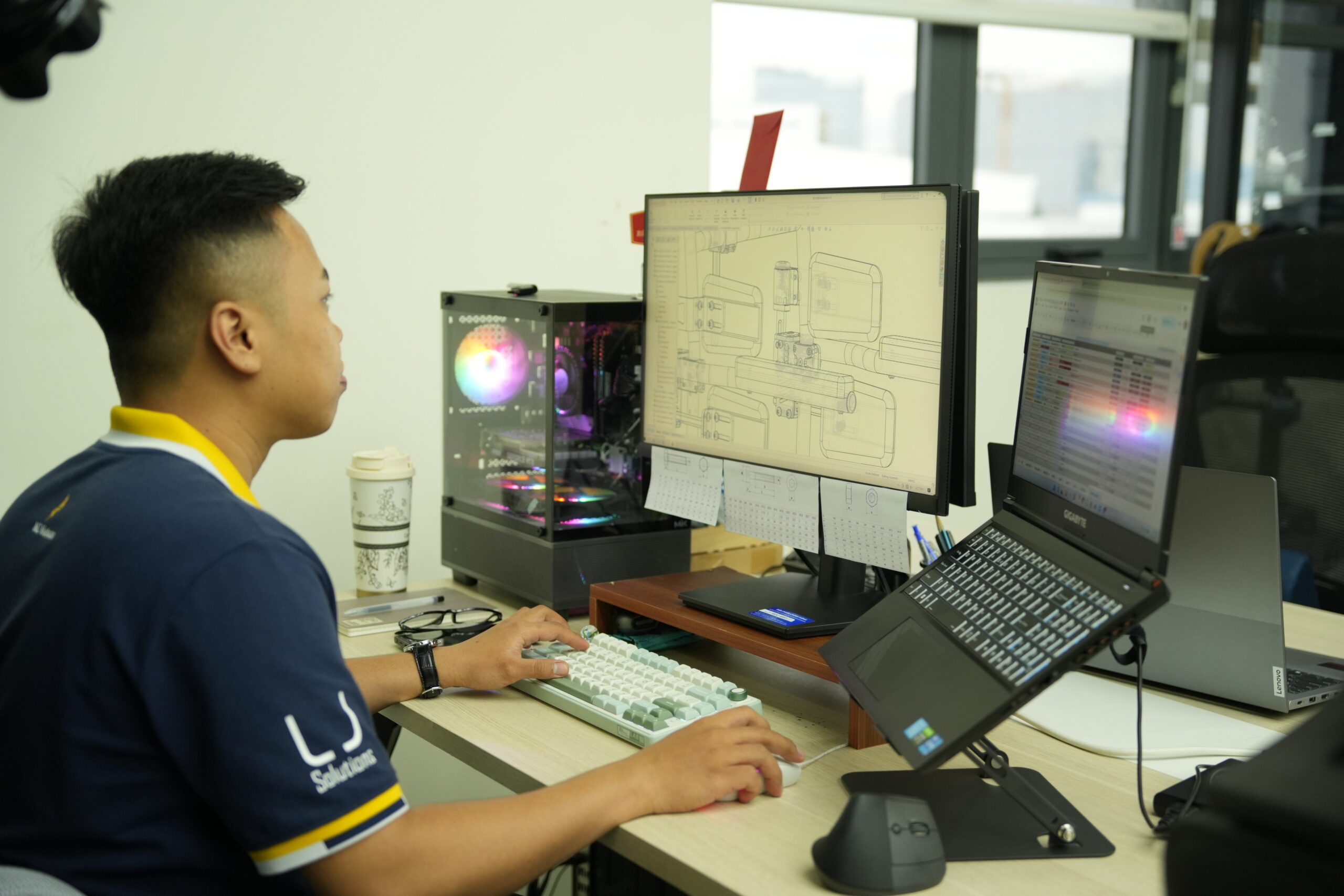
What is build-to-print manufacturing?
Build-to-print manufacturing is a production model in which the customer provides the approved design definition—typically technical drawings, specifications, a bill of materials, and sometimes a physical sample—and the manufacturer produces to those controlled requirements.
The customer owns the product definition; the manufacturing partner is responsible for translating that definition into a stable, repeatable process. For technical sewn and medical seating components, success depends on clear inputs, manufacturability review, controlled sampling, documented approval, and inspection against agreed criteria.
Build-to-print does not mean the supplier should follow an incomplete drawing without question. A capable partner identifies ambiguity, proposes practical manufacturing feedback, and obtains approval before changing the product definition.
Technical drawings, BOMs, and samples: what the buyer should prepare
The strongest starting package gives the manufacturer enough information to understand both form and function. Before requesting a quotation, prepare as many of the following as possible:
- Technical drawings with dimensions, tolerances, revision identifiers, and critical characteristics.
- A bill of materials naming approved fabrics, foams, webbing, hardware, labels, adhesives, and packaging.
- Construction details for seams, reinforcement, binding, closures, attachment points, and assemblies.
- Material specifications, supplier names, colors, coatings, density, hardness, or performance requirements.
- A physical sample or approved “golden sample,” when available.
- Expected order quantity, annual demand, variation by size or color, and forecast assumptions.
- Required inspection, testing, documentation, labeling, and packaging.
If some inputs are unavailable, identify them as open decisions. An explicit gap is safer than an undocumented assumption that later becomes part of the sample.
The nine-step build-to-print manufacturing process
Step 1: Customer submission and design-package review
The customer submits drawings, specifications, the BOM, sample information, quantities, timing, and applicable quality requirements. The manufacturer checks whether the package is complete enough for feasibility review.
For sewn medical components, the review should consider material stack-up, seam access, edge finishing, reinforcement, foam fit, accessory placement, packaging, and inspection access—not dimensions alone.
Step 2: Supplier collaboration and manufacturing feasibility
In the hybrid workflow, MZ Vietnam evaluates manufacturing feasibility, while LJ Solutions coordinates the customer package and sourcing inputs. Together, MZ Vietnam and LJ Solutions review input availability, production methods, equipment fit, likely constraints, setup or tooling needs, and the expected order of operations.
This step distinguishes a responsible feasibility review from a rapid but unreliable quote. The objective is to identify what must be resolved before time and cost commitments are made.
Step 3: Engineering feedback and design-for-manufacturability input
Manufacturing feedback may address seam location, tolerances, material substitution, reinforcement, cutting yield, assembly sequence, or features that are difficult to inspect. Any recommendation should state its reason and expected impact on quality, cost, or production efficiency.
The customer decides whether to accept a design change. The manufacturer should not quietly substitute a material or alter a feature because it is easier to produce.
Step 4: Drawing, BOM, and technical-package finalization
Approved decisions are incorporated into a controlled package. Each drawing, BOM, specification, and work instruction should carry a revision or approval status. Conflicting files should be removed from active use.
For products containing multiple size or configuration options, use a clear matrix showing which materials and features apply to each variation. This reduces the risk of mixing details across models.
Step 5: Commercial quotation and production assumptions
Once the technical package is sufficiently defined, the manufacturer prepares a quotation covering price, MOQ, lead time, sample or tooling requirements, packaging, and other commercial terms. The quote should identify assumptions and exclusions.
A quote based on an unfinished BOM is an estimate, even if it appears precise. Buyers should confirm how changes to material, quantity, construction, or testing will affect price and timing.
Step 6: Prototype sample or pilot-batch manufacturing
The sample converts the approved documentation into a physical product. It gives both teams an opportunity to evaluate fit, construction, appearance, function, workmanship, and manufacturability.
For complex products, a small pilot batch can reveal variation that a single sample cannot. It can test operator instructions, cutting consistency, process sequence, inspection methods, and packaging before a larger production commitment.
Step 7: Sample evaluation and formal approval
The customer compares the sample with the agreed requirements and records any changes. Approval should identify the sample, drawing revision, BOM revision, deviations, and date. If the sample becomes the physical reference, define how it will be stored and protected.
Avoid approving a sample through an informal message that leaves unresolved comments scattered across email threads. A controlled approval record becomes the bridge between development and production.
Step 8: Production purchase order and readiness confirmation
After sample approval, the customer issues a purchase order referencing the approved technical and commercial package. Before production starts, the parties confirm quantity, revisions, material status, schedule, packaging, inspection expectations, and delivery terms.
Forecast visibility is especially useful when materials have long lead times or supplier minimums. It allows the manufacturing team to plan inputs without treating every repeat order as a fresh sourcing exercise.
Step 9: Production, quality control, and delivery
Production proceeds under approved instructions and defined inspection stages. MZ Vietnam’s documented workflow begins with checks on received materials, then places controls around preparation and conversion activities such as cutting, printing, embroidery, accessory work, sewing, and assembly. Inline and end-of-line reviews lead into a separate release inspection before shipment.
When output does not meet requirements, it is flagged, corrected when appropriate, and checked again before advancing. At shipment release, the review can assess visual workmanship, key measurements, expected operation, product steadiness, pack-out, and any criteria agreed with the customer.
Common build-to-print manufacturing failure modes
Programs often become unstable when:
- The BOM uses generic descriptions rather than approved material specifications.
- Drawings, samples, and email instructions conflict.
- Critical dimensions or functional characteristics are not identified.
- Sample changes are not transferred into controlled documents.
- The supplier substitutes materials without customer approval.
- Production begins before inspection criteria are agreed.
- Repeat orders reference an obsolete revision.
The approved package—not organizational memory—should define the product.
From prototype manufacturing to repeat production
Stable repeat production requires more than a successful first sample. Maintain revision control, approved material sources, inspection instructions, change approval, and records appropriate to product risk. Review defects and process feedback to improve execution without altering approved product requirements.
MZ Vietnam has documented a wheelchair backrest and cushion rebranding program that moved from early concept and material decisions through fitting work and completion of the technical package. Development took about six months before the customer approved the program for mass production. The example shows that substantial technical development can require several iterations; it is not a standard timeline for every project.
Start with a controlled manufacturing package
Build-to-print manufacturing works best when design ownership, production responsibility, and approval authority are clear. A disciplined drawing-to-production process reduces ambiguity, supports better quotations, and gives the factory a stable basis for inspection and repeatability.
To assess manufacturing fit, LJ Solutions can review your drawings, BOM, specifications, and available sample information during the initial feasibility discussion.
References
- U.S. Food and Drug Administration. “PMA Quality System.” FDA, accessed July 21, 2026. https://www.fda.gov/medical-devices/premarket-approval-pma/pma-quality-system
- U.S. Food and Drug Administration. “Quality System Regulation Labeling Requirements.” FDA, accessed July 21, 2026. https://www.fda.gov/medical-devices/device-labeling/quality-system-regulation-labeling-requirements
- Modus Advanced. “What Is Build-to-Print Manufacturing?” Accessed July 21, 2026. https://www.modusadvanced.com/resources/blog/what-is-build-to-print-manufacturing
- Applied Engineering. “Build-to-Print vs. Design-and-Spec Fabrication: A Quick Guide.” February 27, 2021. https://www.appliedengineering.com/blog/2021/2/27/build-to-print-vs-design-and-spec-fabrication-quick-guide